Should You Try Myofascial Release in Suva for Pain Relief
Table of Contents
What Is Myofascial Release?
Who May Benefit From Myofascial Release in Suva?
What Happens During a Physiotherapy Assessment?
Is Myofascial Release Safe for Everyone?
How Does It Fit Into a Full Rehab Plan?
Key Takeaways
Relieve Persistent Muscle Tension and Move Comfortably Again
Frequently Asked Questions About Myofascial Release in Suva
Why You Should Try Myofascial Release in Suva for Pain Relief
Ongoing neck, back, shoulder, or hip pain can affect work, sport, sleep, and family life. For patients in Suva, Nadi, Savusavu, Labasa, and across Fiji’s islands, tight muscles and restricted movement can become frustrating when pain keeps returning. At Physiotherapy Clinic Fiji Pte Limited, myofascial release may be used as part of a wider Physiotherapy plan. This guide explains what myofascial release is, who may benefit, what to expect, and why professional assessment matters before starting hands-on care.
What Is Myofascial Release?
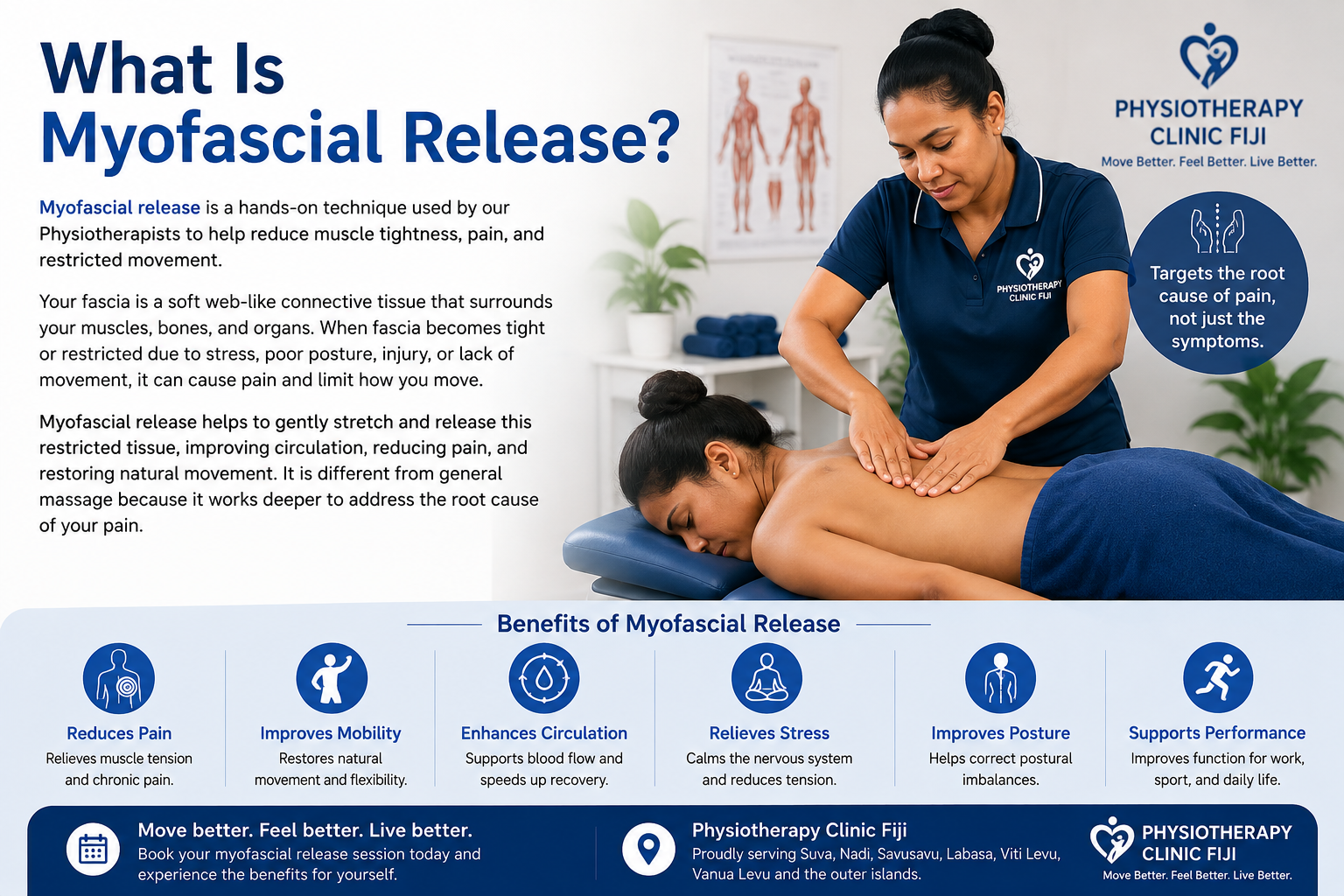
Myofascial release is a hands-on technique used by trained Physiotherapists. It focuses on fascia, which is connective tissue that surrounds and supports muscles, joints, and other body structures.
Fascia should move and glide as the body moves. After injury, surgery, stress, or long periods in one posture, it may become tight or sensitive.
This tightness can sometimes feel like deep aching, pulling, stiffness, or stubborn muscle knots. The pain may feel hard to pinpoint and may not improve with rest alone.
A Physiotherapist may use slow, sustained pressure on areas that feel restricted. This is different from general relaxation massage because it follows an assessment and specific rehab goals.
Who May Benefit From Myofascial Release in Suva?
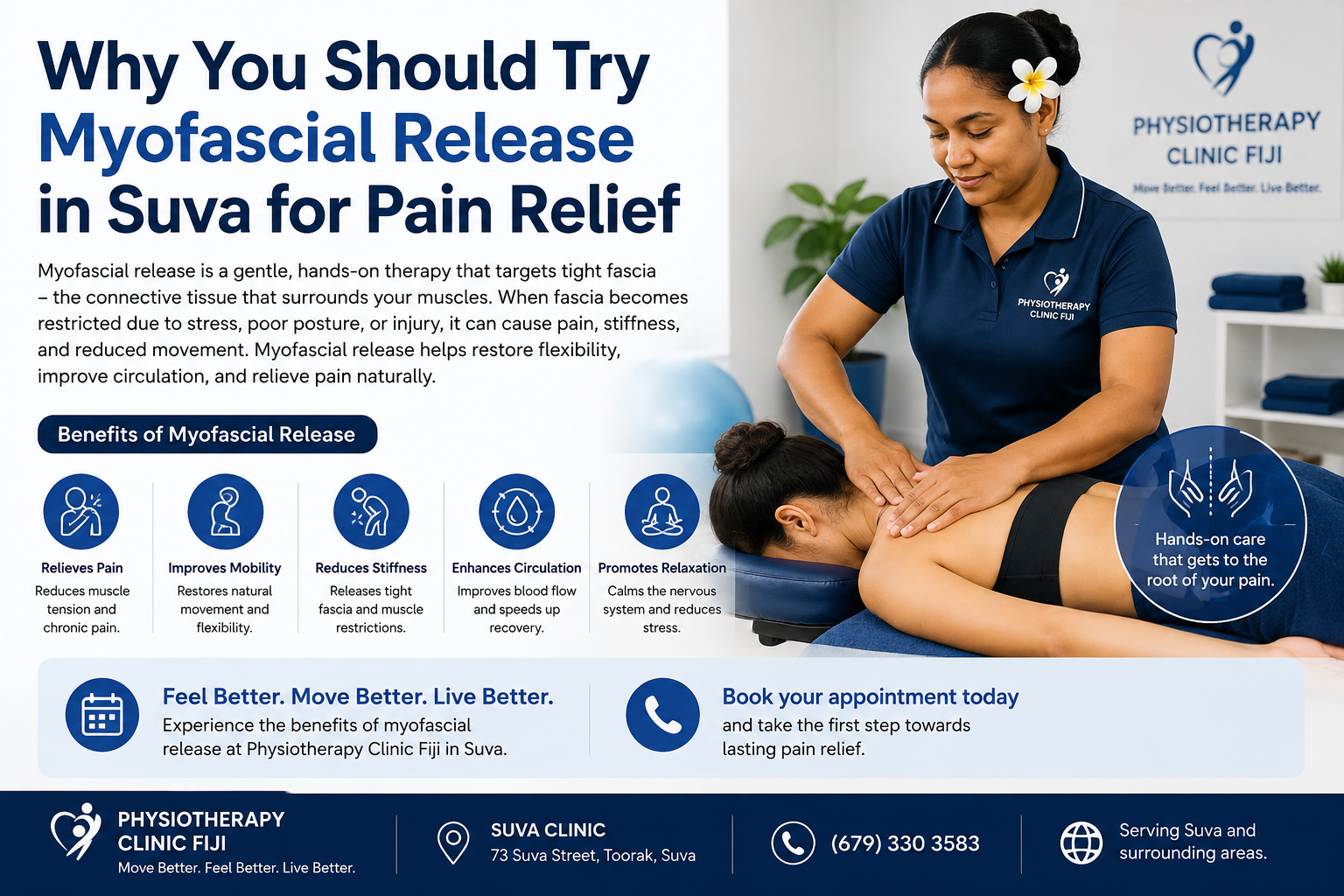
People in Suva and across Fiji may seek care for pain linked to work, driving, sport, or daily duties. Myofascial release may be considered when tight tissue appears to affect movement.
It may be discussed for symptoms such as:
Neck and shoulder tightness from desk work or long phone use
Low back or hip stiffness linked to posture or lifting
Upper back tension linked to stress or repeated sitting
Sports-related tightness after rugby, netball, running, swimming, or paddling
Stiffness around old injuries or surgical scars
A scar is tissue that forms as the body heals after a wound or surgery. Some scars may feel tight and may affect nearby movement.
Not every tight muscle needs myofascial release. A proper Physiotherapy assessment helps decide whether it is suitable for your condition. Book an appointment today.
What Happens During a Physiotherapy Assessment?
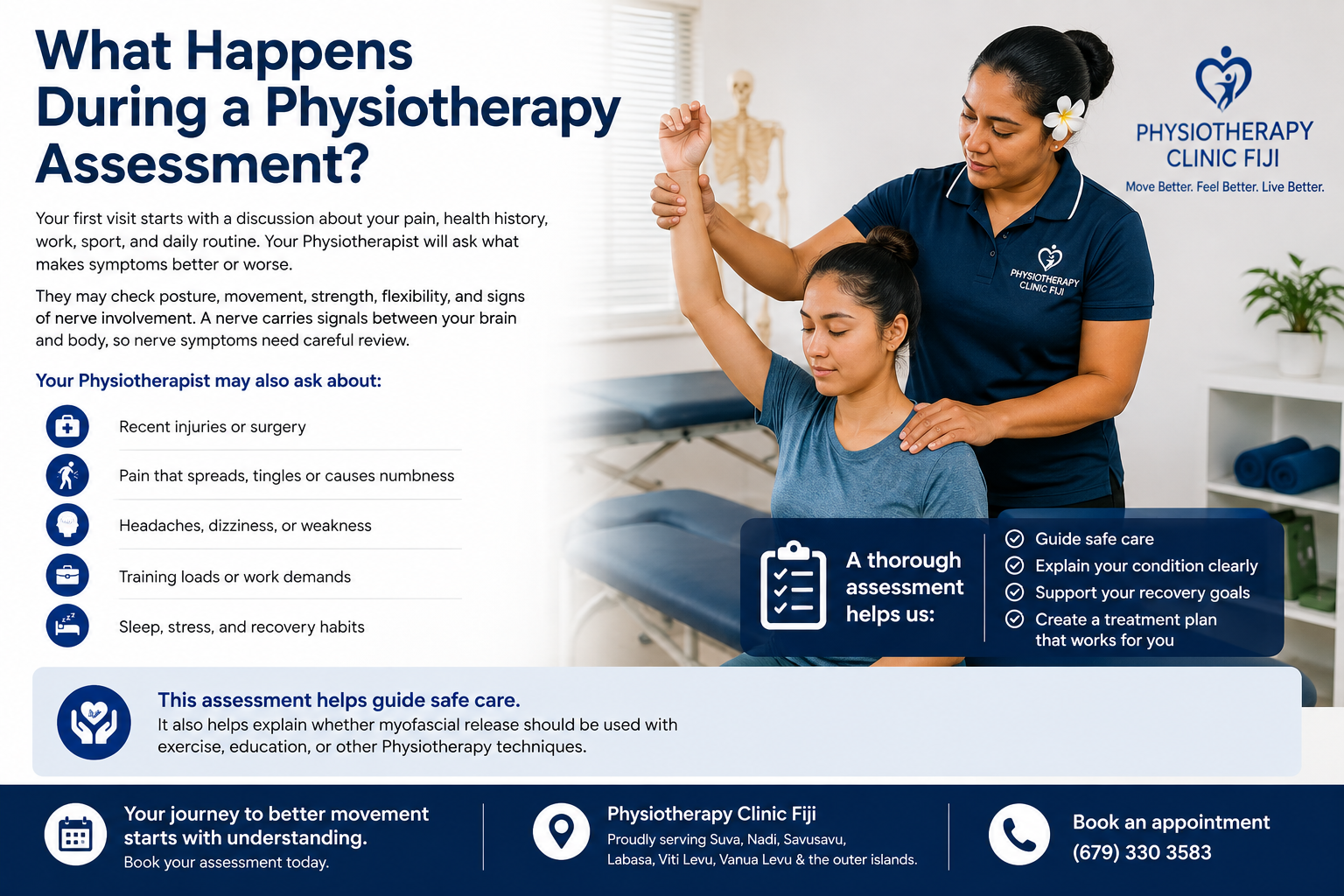
Your first visit starts with a discussion about your pain, health history, work, sport, and daily routine. Your Physiotherapist will ask what makes symptoms better or worse.
They may check posture, movement, strength, flexibility, and signs of nerve involvement. A nerve carries signals between your brain and body, so nerve symptoms need careful review.
Your Physiotherapist may also ask about:
Recent injuries or surgery
Pain that spreads, tingles, or causes numbness
Headaches, dizziness, or weakness
Training loads or work demands
Sleep, stress, and recovery habits
This assessment helps guide safe care. It also helps explain whether myofascial release should be used with exercise, education, or other Physiotherapy techniques.
Is Myofascial Release Safe for Everyone?
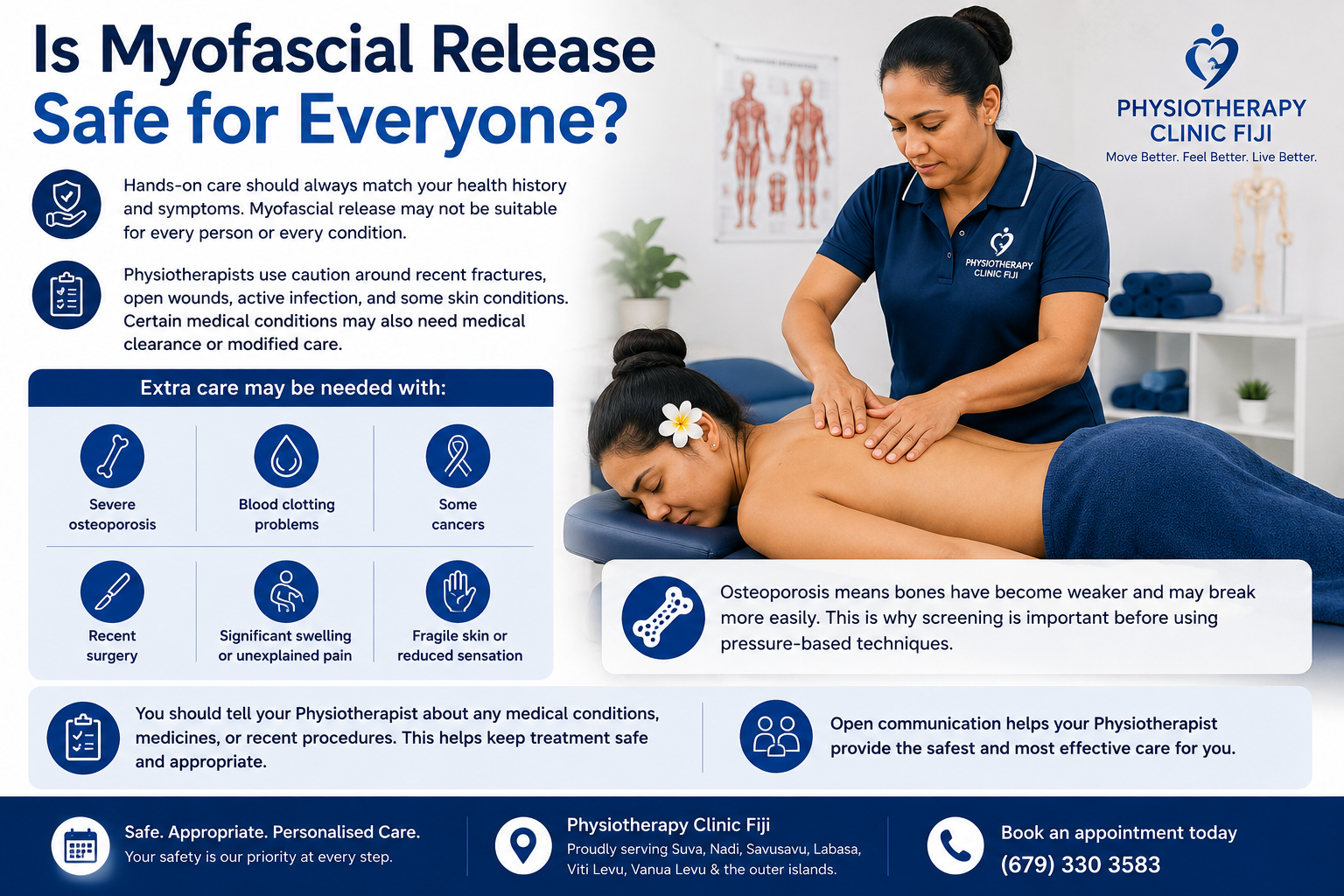
Hands-on care should always match your health history and symptoms. Myofascial release may not be suitable for every person or every condition.
Physiotherapists use caution around recent fractures, open wounds, active infection, and some skin conditions. Certain medical conditions may also need medical clearance or modified care.
Extra care may be needed with:
Severe osteoporosis
Blood clotting problems
Some cancers
Recent surgery
Significant swelling or unexplained pain
Fragile skin or reduced sensation
Osteoporosis means bones have become weaker and may break more easily. This is why screening is important before using pressure-based techniques.
You should tell your Physiotherapist about any medical conditions, medicines, or recent procedures. This helps keep treatment safe and appropriate.
How Does It Fit Into a Full Rehab Plan?
Myofascial release is usually one part of a complete Physiotherapy plan. It may help make movement more comfortable, but lasting improvement often needs more than hands-on treatment.
A full plan may include assessment, education, strengthening, movement retraining, and recovery advice. Movement retraining means learning safer or more efficient ways to move during daily tasks.
Your Physiotherapist may also consider posture, workload, sport demands, and activity habits. This helps care match real life in Fiji, not a generic routine.
Physiotherapy Clinic Fiji Pte Limited supports patients Fiji-wide, including Suva, Nadi, Savusavu, Labasa, Viti Levu, Vanua Levu, and the outer islands.
Key Takeaways
Myofascial release targets tight connective tissue that may affect movement and pain.
It works best as part of a complete Physiotherapy plan, not as a stand-alone fix.
Neck, back, shoulder, hip, and sports-related pain may need a full assessment.
Safety screening matters, especially after surgery, injury, or complex medical conditions.
If persistent stiffness limits your life, book an appointment for a personalised Physiotherapy assessment.
Relieve Persistent Muscle Tension and Move Comfortably Again
If tight, painful muscles are limiting your daily activities, Physiotherapy Clinic Fiji Pte Limited can help you move with more confidence. Our therapists use evidence-based techniques like myofascial release in Suva to target stubborn tension and improve mobility. We support patients in Suva, Nadi, Savusavu, Labasa, and across Fiji’s islands. Book an appointment today so our team can assess your needs and guide your next step.
Frequently Asked Questions About Myofascial Release in Suva
Does myofascial release hurt?
Myofascial release should feel like firm, tolerable pressure or a stretching sensation. It should not feel sharp, alarming, or unsafe. Your Physiotherapist should adjust the technique based on your comfort and response.
How many sessions will I need?
The number of sessions depends on your condition, symptoms, goals, and response to treatment. Some people need only short-term support, while long-standing pain may need a wider plan. Your Physiotherapist can explain expectations after assessment.
Is myofascial release the same as massage?
No, myofascial release is more targeted and assessment-based. Massage often focuses on general relaxation or soft tissue comfort. In Physiotherapy, myofascial release is linked to movement, pain, function, and rehab goals.
Can myofascial release help sports injuries?
It may help when tight tissue limits movement after sport or training. However, sports injuries often need strength, load management, and return-to-play planning. A Physiotherapist can decide where myofascial release fits.
Is myofascial release safe for older adults?
It can be safe when adjusted for age, skin condition, bone health, and medical history. Older adults may need gentler techniques and careful screening. A Physiotherapist will choose treatment based on safety and comfort.
What should I wear to my appointment?
Wear comfortable clothing that allows easy movement and access to the painful area. Shorts may help for hip or leg concerns, while a singlet may help for shoulder or neck care. Privacy and comfort should always be respected.