Why Office Workers in Fiji Need Physiotherapy More Than They Think
Table of Contents
Hidden Health Risks Facing Fiji’s Office Workers
Why Desk Jobs in Fiji Cause Hidden Pain
How Fiji’s Climate and Lifestyle Add Strain
When Office Pain Becomes a Bigger Problem
How Physiotherapy Supports Office Workers
What to Expect at Your First Physiotherapy Visit
Key Takeaways
Relieve Your Workday Pain With Targeted Physiotherapy Support
FAQs About Physiotherapy for Office Workers in Fiji
Hidden Health Risks Facing Fiji’s Office Workers
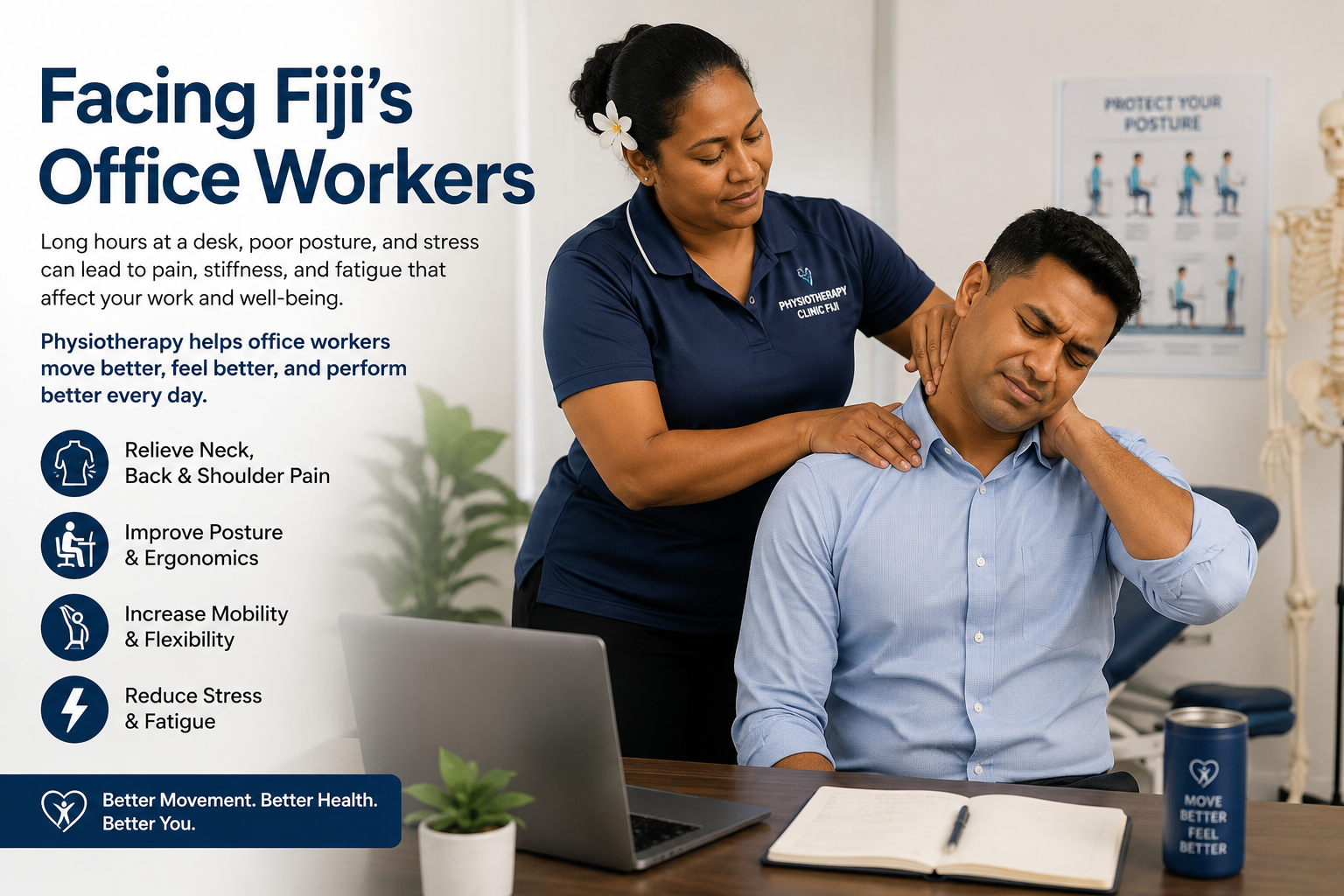
Neck pain, tight shoulders, and lower back aches are common for many office workers in Fiji. Long hours at a desk can feel normal, but repeated pain is not something to ignore. Physiotherapy Clinic Fiji Pte Limited supports office workers in Suva, Nadi, Savusavu, Labasa, and across Fiji’s islands. This guide explains why desk pain builds, how Fiji’s work habits may add strain, and when professional office worker Physiotherapy in Fiji can help. You will also learn which warning signs suggest your body needs more than a quick stretch or pain relief tablet.
Why Desk Jobs in Fiji Cause Hidden Pain
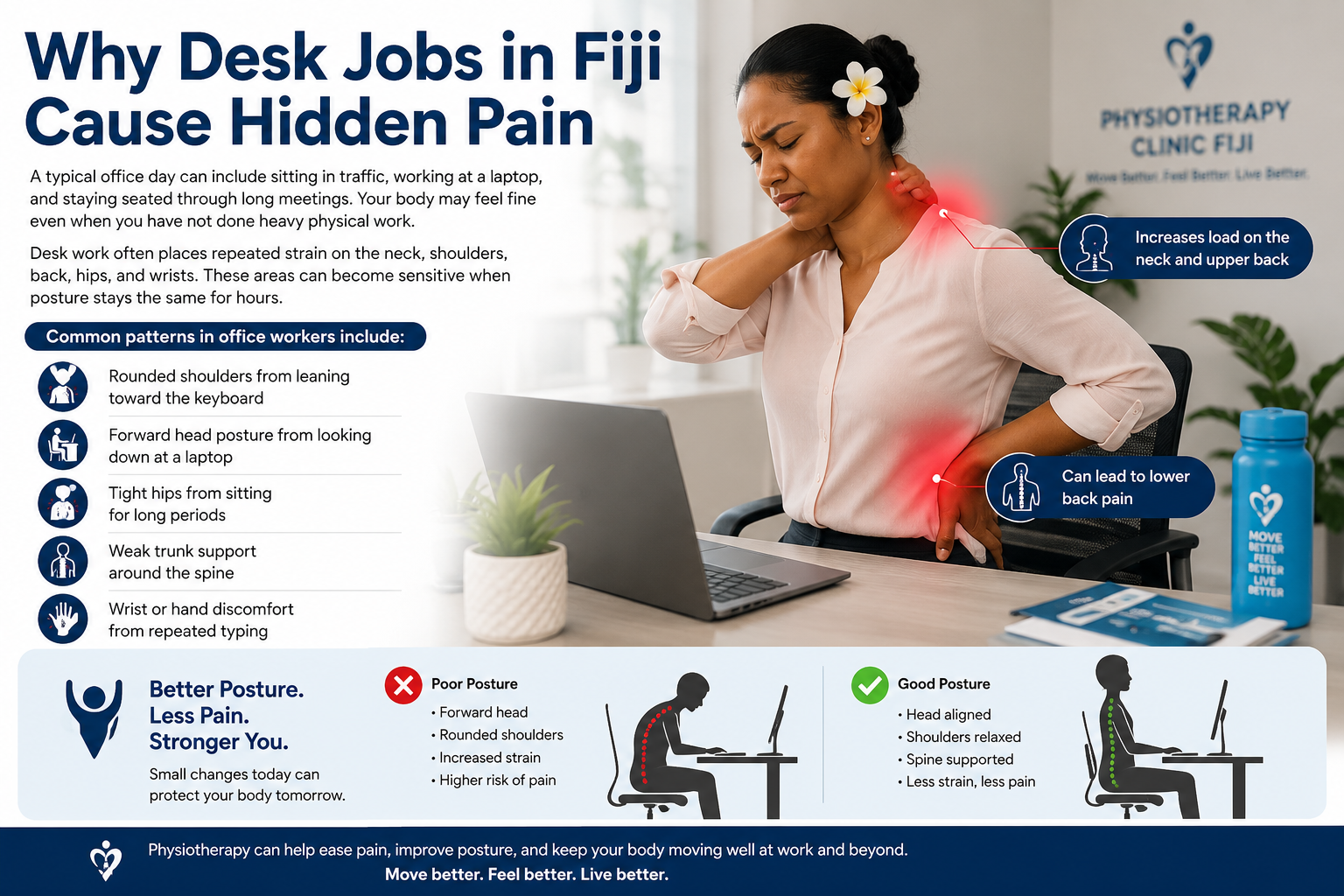
A typical office day can include sitting in traffic, working at a laptop, and staying seated through long meetings. Your body may feel tired even when you have not done heavy physical work.
Desk work often places repeated strain on the neck, shoulders, back, hips, and wrists. These areas can become sensitive when posture stays the same for hours.
Common patterns in office workers include:
Rounded shoulders from leaning toward the keyboard
Forward head posture from looking down at a laptop
Tight hips from sitting for long periods
Weak trunk support around the spine
Wrist or hand discomfort from repeated typing
Forward head posture means the head sits too far in front of the shoulders. This can increase load on the neck and upper back.
How Fiji’s Climate and Lifestyle Add Strain
Fiji’s warm, humid climate can make desk fatigue feel worse. Some people feel heavier, stiffer, or more tired after long hours indoors.
Strong air conditioning may also affect tense muscles. For some office workers, cool air and long sitting can make the neck and shoulders feel more guarded.
Weekends can place different demands on the body. Many people sit most of the week, then switch quickly into active days.
Common weekend activities may include:
Rugby, netball, or gym training
Gardening, yard work, or farm chores
Village work involving lifting or bending
Family duties that require carrying or standing
This sudden change from sitting to heavy activity can expose weak or stiff areas. A Physiotherapist can help assess whether your body is ready for these demands. Book an appointment today.
When Office Pain Becomes a Bigger Problem
Desk pain can start quietly. It may appear as morning stiffness, a dull headache, or a sore lower back late in the day.
Many workers push through symptoms with coffee, painkillers, or a short stretch. These may offer short-term comfort, but they do not explain why pain keeps returning.
Early warning signs include:
Neck tension that returns most workdays
Headaches starting near the base of the skull
Tingling or pins and needles in the hands
Low back pain after sitting
Shoulder tightness that affects sleep
Dropping objects or noticing hand weakness
Pins and needles can suggest nerve irritation. A nerve carries signals between your brain and body, so these symptoms need proper attention.
How Physiotherapy Supports Office Workers
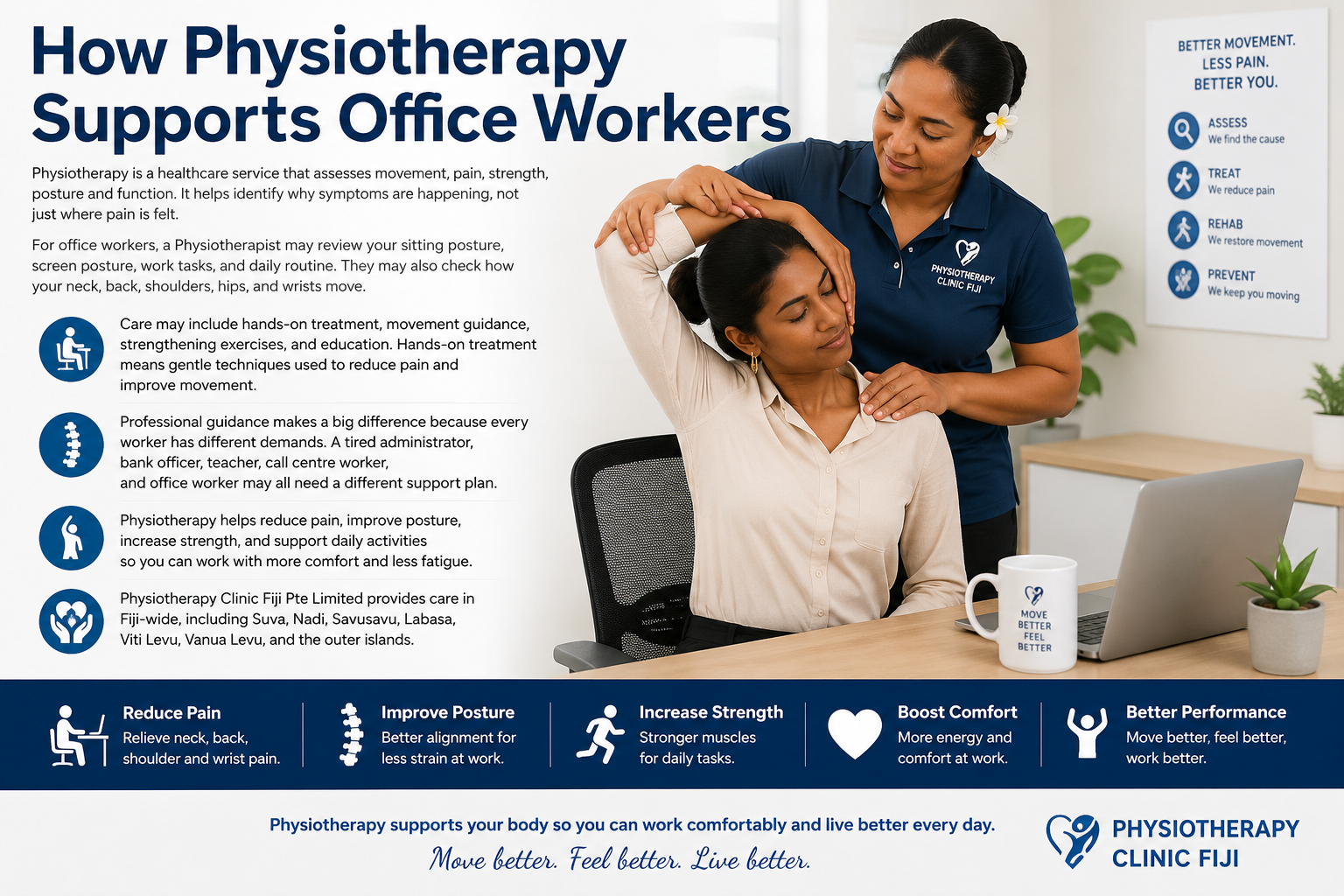
Physiotherapy is a health service that assesses movement, pain, strength, posture, and function. It helps identify why symptoms are happening, not just where pain is felt.
For office workers, a Physiotherapist may review your sitting posture, screen position, work tasks, and daily routine. They may also check how your neck, back, shoulders, hips, and wrists move.
Care may include hands-on treatment, movement guidance, strengthening advice, and education. Hands-on treatment means gentle techniques used to help joints and muscles move more comfortably.
Professional guidance matters because every worker has different demands. A hotel administrator, bank officer, teacher, call centre worker, and remote worker may all need different support.
Physiotherapy Clinic Fiji Pte Limited provides care Fiji-wide, including Suva, Nadi, Savusavu, Labasa, Viti Levu, Vanua Levu, and the outer islands.
What to Expect at Your First Physiotherapy Visit
Your first visit helps your Physiotherapist understand your symptoms and daily workload. The goal is to find the likely cause and guide a safe plan.
A desk worker assessment may include:
A discussion about your workday, commute, and hobbies
A review of sitting and standing posture
Simple movement checks
Strength and flexibility testing
Questions about sleep, stress, and symptom patterns
Your Physiotherapist may also ask about busy work periods. Reporting deadlines, tourism peaks, and exam seasons can all increase strain.
Treatment depends on what your assessment shows. Your plan may include education, hands-on care, exercise guidance, and changes that fit your work routine.
Most office workers do not need to stop work completely. Your Physiotherapist can explain what to adjust, what to avoid, and when to seek medical review.
Key Takeaways
Desk pain often builds slowly from repeated posture and movement habits.
Neck, back, shoulder, and wrist symptoms can affect work, sleep, and daily life.
Fiji’s climate, commuting, workload, and weekend activity can increase physical strain.
Early Physiotherapy can help identify the cause before pain becomes harder to manage.
If desk pain keeps returning, book an appointment for a personalised assessment.
Relieve Your Workday Pain With Targeted Physiotherapy Support
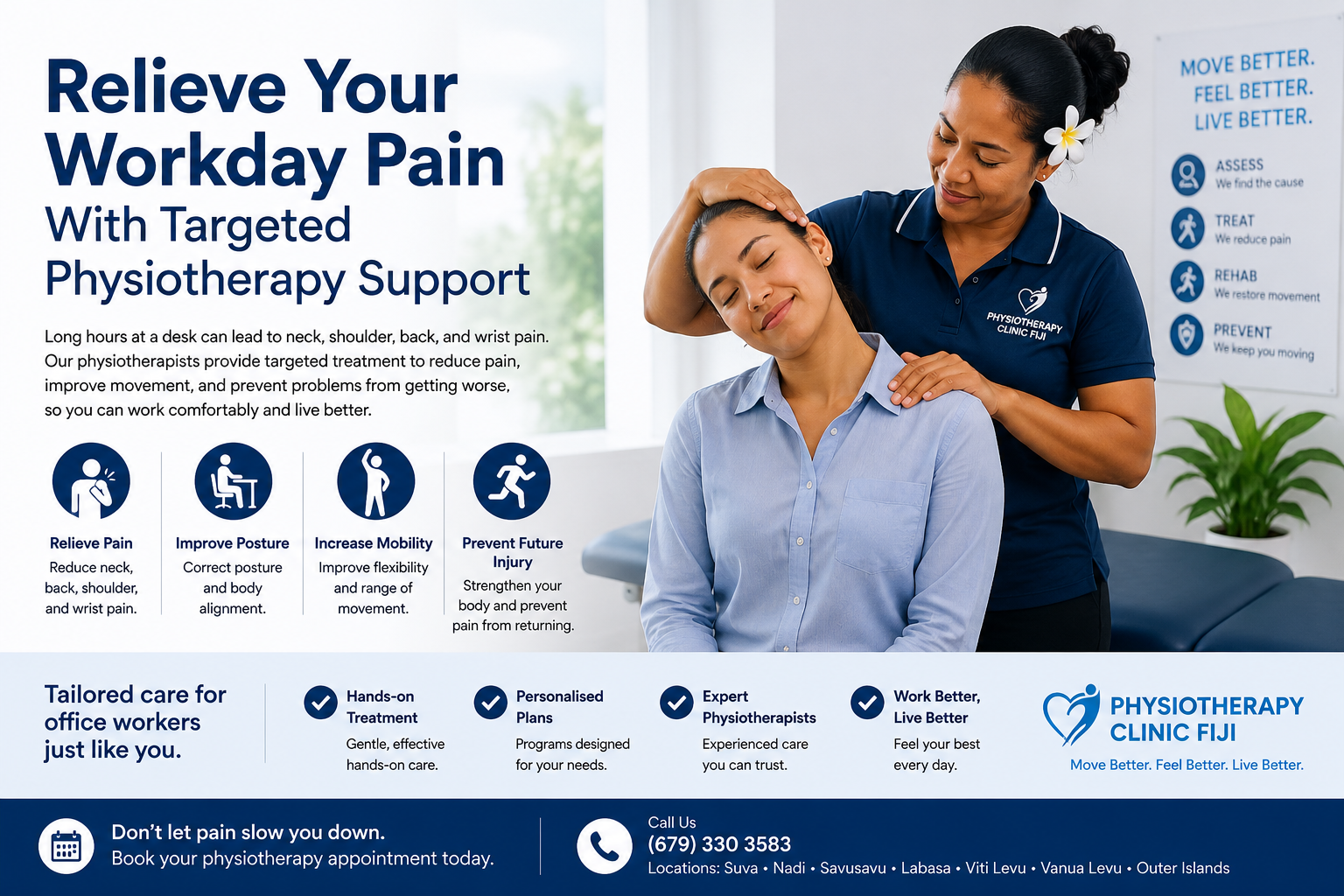
If long hours at your desk are leaving you stiff, sore, or fatigued, Physiotherapy Clinic Fiji Pte Limited is here to help you move comfortably again. Our team provides tailored office worker Physiotherapy in Fiji that focuses on posture, mobility, and pain linked to your work demands. We support patients Fiji-wide, including Suva, Nadi, Savusavu, Labasa, Viti Levu, Vanua Levu, and the outer islands. Book an appointment today to start prioritising your body, so work no longer comes at the expense of your health.
FAQs About Physiotherapy for Office Workers in Fiji
Do I need Physiotherapy if my pain is only mild?
Mild pain may still need attention if it keeps returning. Early Physiotherapy can help identify the cause before symptoms affect work, sleep, or sport.
How is Physiotherapy different from massage?
Massage usually focuses on soft tissue relaxation. Physiotherapy combines assessment, hands-on care, movement guidance, education, and exercises based on your symptoms.
Can Physiotherapy help with headaches from desk work?
Yes, Physiotherapy may help when headaches relate to neck posture, shoulder tension, or upper back stiffness. A Physiotherapist will assess whether your symptoms need Physiotherapy or medical review.
Will I need to stop working during treatment?
Many office workers can continue working while receiving care. Your Physiotherapist can guide changes to reduce strain during your workday.
Can Physiotherapists help with workstation setup?
Yes, workstation advice is often part of office worker care. Your Physiotherapist may review chair height, screen position, keyboard use, and sitting habits.
Should I see a doctor or Physiotherapist first?
For many desk-related aches, a Physiotherapist can be a helpful first step. If symptoms suggest a medical concern, your Physiotherapist will advise you to see a doctor.