Falls Prevention for Older Adults in Fiji: Home Safety and Balance Training
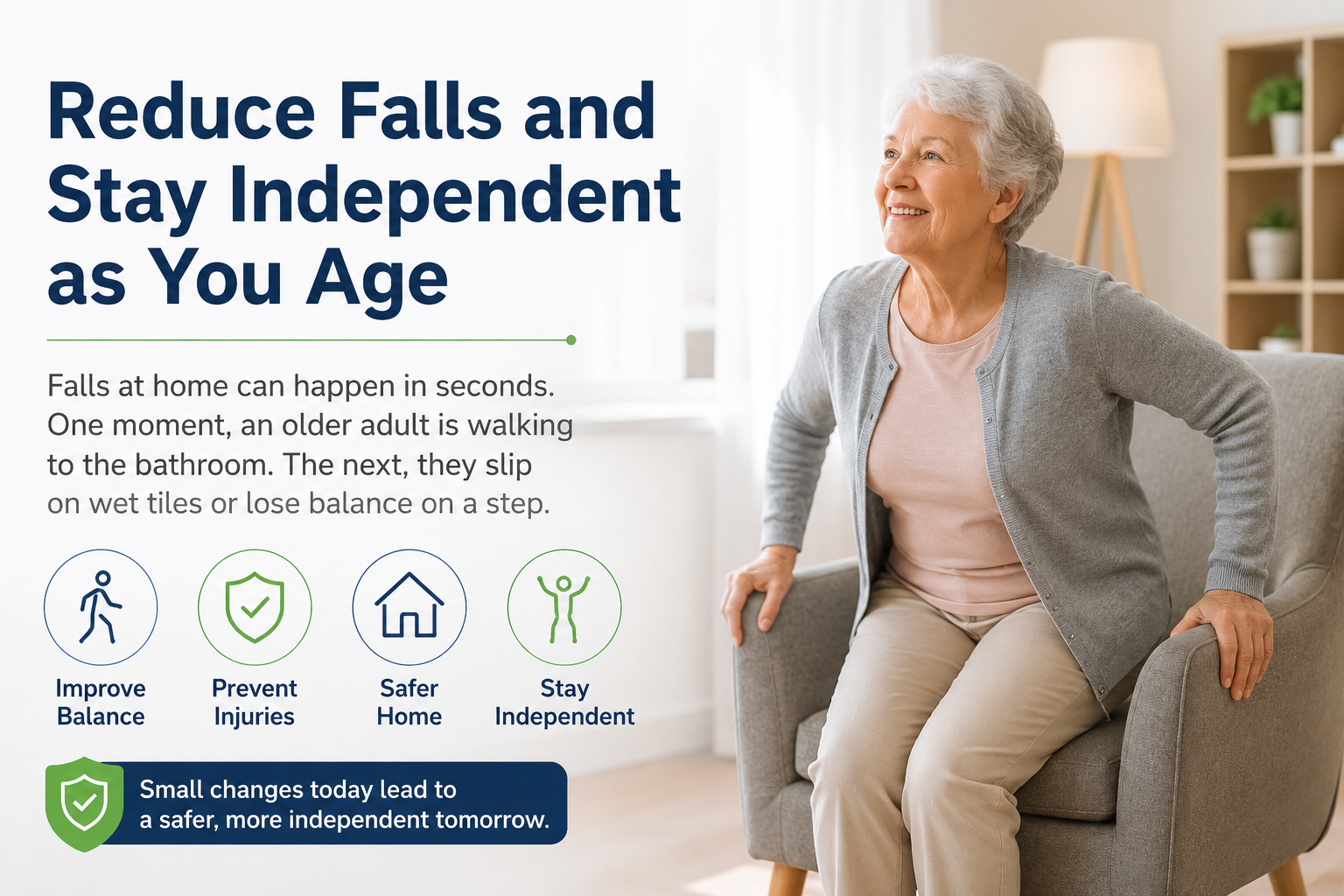
Reduce Falls and Stay Independent as You Age
Falls at home can happen in seconds. One moment, an older adult is walking to the bathroom. The next, they slip on wet tiles or lose balance on a step.
In Fiji, fall risks can be higher during rain, humidity, and daily movement across indoor and outdoor surfaces. At Physiotherapy Clinic Fiji Pte Limited, we support families in Suva, Nadi, Savusavu, Labasa, and across Fiji’s outer islands with safer movement and fall prevention guidance.
This article explains why falls become more common with age, what home hazards to look for, and when to seek elderly Physiotherapy in Fiji. It will help you recognise risks early without replacing a professional assessment.
Table of Contents
Key Takeaways
Why Do Falls Happen More Often With Age?
How Can Home Safety Checks Prevent Falls?
What Home Areas Need The Most Attention?
How Can Balance And Strength Training Support Safer Movement?
When Should You See A Physiotherapist?
Wet Season Fall Risks In Fiji
Quick Home Checklist To Prevent Falls
FAQs About Fall Prevention In Older Adults
Take The Next Step Toward Safer, Stronger Aging
Key Takeaways
Falls can cause injury, fear, and loss of independence in older adults.
Wet floors, uneven paths, poor lighting, and steps can increase fall risk in Fiji.
A home safety check helps families spot hazards before a fall happens.
Balance training and strength work should be guided by a Physiotherapist.
Older adults should seek help after any fall, near-fall, or change in walking.
Physiotherapy Clinic Fiji Pte Limited serves Suva, Nadi, Savusavu, Labasa, and Fiji’s outer islands.
Why Do Falls Happen More Often With Age?
Falls become more common because the body changes over time. Leg muscles may weaken, joints may feel stiff, and reaction time can slow down.
Vision changes can also make steps, shadows, and uneven ground harder to judge. This is especially true at night or in dim hallways.
Some health conditions can increase fall risk, including:
Diabetes
Stroke and other neurological conditions
Arthritis and joint pain
Low blood pressure or heart issues
Some medicines may also cause dizziness, drowsiness, or blurred vision. When these effects combine with weakness or pain, balance can become harder to control.
Daily life in Fiji can add extra challenges. Older adults may need to climb steps, shower on tiled floors, or walk across grass, gravel, or uneven concrete.
These activities are not unsafe by themselves. The risk rises when health changes, surface hazards, and poor support happen together.
How Can Home Safety Checks Prevent Falls?
A fall prevention plan often starts with the home. Many falls happen in familiar spaces because small hazards are easy to miss.
A home safety check is not about making the house feel clinical. It is about helping an older adult move with more confidence.
Families can begin by looking at the places used most often. These include bedrooms, bathrooms, kitchens, entrances, and outdoor paths.
Common indoor hazards include:
Clutter in walkways
Loose rugs or mats
Cords across the floor
Poor lighting in hallways
Wet bathroom or kitchen tiles
No grab support near toilets or showers
Outdoor areas need the same attention. In Fiji, rain can make steps, concrete, and tiled entrances slippery for hours.
If you are worried about repeated slips, near-falls, or fear of walking, book an appointment for professional guidance. A Physiotherapist can assess movement and explain which home changes matter most.
What Home Areas Need The Most Attention?
Bathrooms are one of the highest-risk areas for older adults. Wet tiles, soap, low lighting, and rushed movement can all increase danger.
Entrances are also important. Mud, water, loose footwear, and uneven thresholds can make walking in and out harder.
Bedrooms should be easy to move through at night. A clear path to the bathroom can reduce tripping when someone is tired or half-awake.
Stairs and outdoor paths need steady lighting and safe surfaces. Older adults should not have to guess where the next step begins.
Families and caregivers can help by checking these areas regularly. Small changes may improve safety, but ongoing balance problems still need professional review.
How Can Balance And Strength Training Support Safer Movement?
Balance and strength affect how safely a person moves through daily life. Weak legs, stiff joints, and poor posture can make simple tasks feel difficult.
A Physiotherapist may use strength exercises and balance activities as part of care. These are chosen after checking the person’s health, walking pattern, pain, and confidence.
The goal is not to push hard or copy exercises from another person. The goal is to build safer movement in a way that fits the older adult.
A program may focus on:
Standing control
Leg and hip strength
Safe turning
Sit-to-stand movement
Walking confidence
Step and stair safety
Older adults should avoid starting a full exercise routine without advice if they feel dizzy, weak, breathless, or unsteady. Professional guidance helps reduce risk and keeps training appropriate.
When Should You See A Physiotherapist?
An older adult should see a Physiotherapist after any fall. This is true even if there is no major injury.
A near-fall is also a warning sign. Catching yourself on furniture, walls, or another person may mean balance is changing.
Families should also watch for:
Slower walking
Shuffling steps
Fear of leaving the house
Difficulty rising from chairs
Holding furniture while walking
New dizziness or weakness
Elderly Physiotherapy in Fiji can help identify what is contributing to the problem. A Physiotherapist can assess strength, balance, walking, and daily movement habits.
This assessment helps families understand whether the main issue is weakness, pain, balance, confidence, or the home setup.
Wet Season Fall Risks In Fiji
During wet months and cyclone season, fall risks can increase. Rain, mud, and humidity can change how safe common surfaces feel.
Tiles and concrete may become slippery even when they look manageable. Entrances, outdoor steps, and washing areas can stay damp longer than expected.
Older adults may also rush when trying to avoid rain. Rushing can increase the chance of missing a step or slipping.
Practical safety habits include:
Keeping entrances as dry as possible
Using footwear with good grip
Improving lighting near steps
Keeping walking aids close to main exits
Checking on older relatives more often during heavy rain
These steps can reduce hazards, but they do not replace Physiotherapy care when balance or walking has changed.
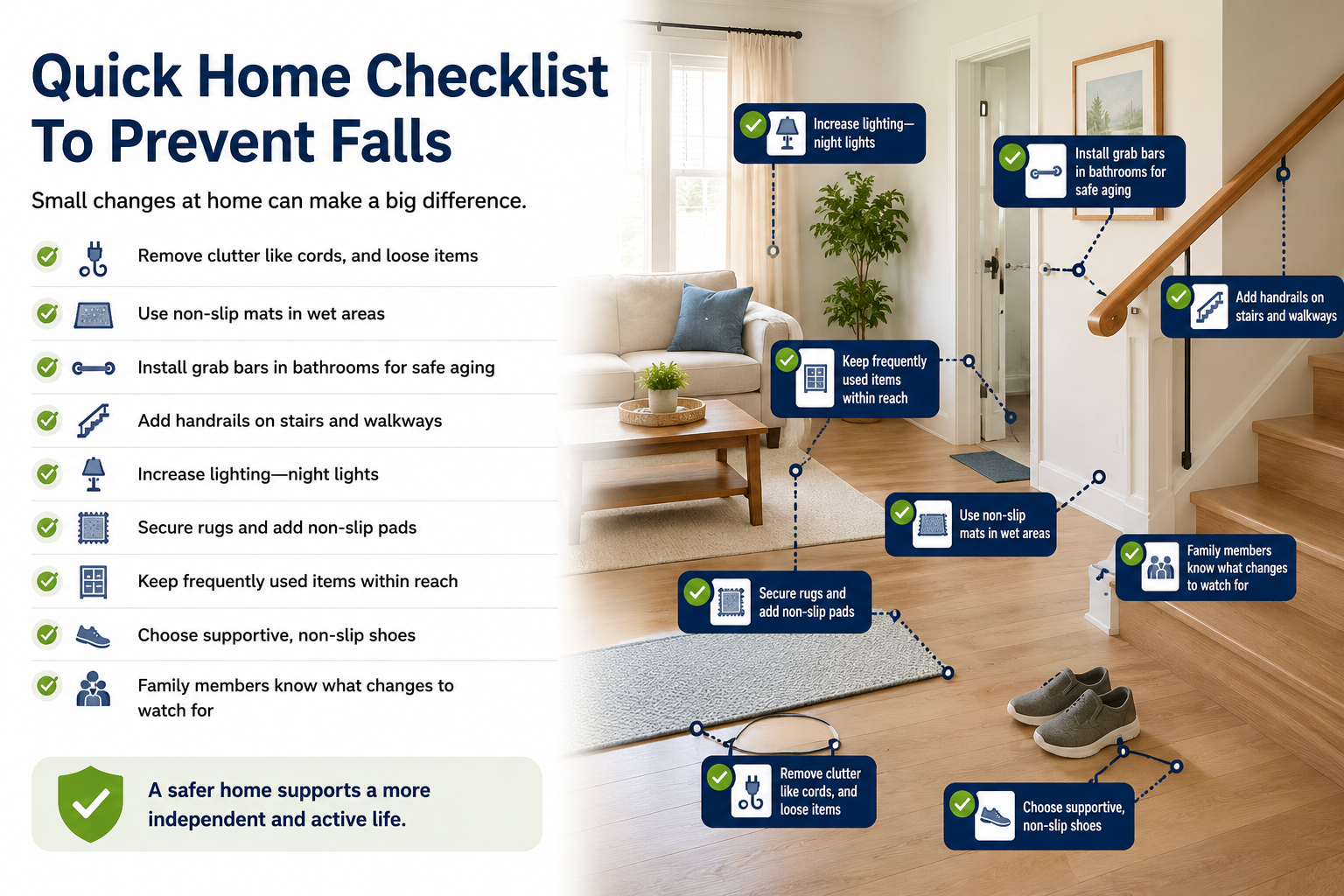
Quick Home Checklist To Prevent Falls
Use this checklist to review the home one room at a time:
Floors are clear of clutter, cords, and loose items
Main walkways do not have loose rugs
Hallways, stairs, and bathrooms have bright lighting
Bathrooms have support where needed
Wet areas have non-slip mats
Footwear fits well and has good grip
Walking aids are steady and correctly sized
Outdoor steps and paths are clear and visible
Family members know what changes to watch for
If several items need attention, start with the areas used every day. Bathrooms, bedrooms, and entrances are often the most urgent.
FAQs About Fall Prevention In Older Adults
What are the most common causes of falls in older adults in Fiji?
Common causes include weak muscles, poor balance, unsafe home environments, and medical conditions such as stroke or diabetes. Wet floors, uneven outdoor surfaces, and poor lighting can also increase risk.
When should an older person see a Physiotherapist about falls?
They should see a Physiotherapist after any fall, near-fall, new dizziness, or sudden change in walking. Early assessment can help identify risks before a more serious injury happens.
What happens in a fall prevention Physiotherapy session?
The Physiotherapist checks strength, balance, walking, and daily movement tasks. They may also ask about the home setup, health history, falls, and confidence with movement.
How often should older adults do balance and strength exercises?
The right frequency depends on the person’s health, energy, pain, and fall risk. A Physiotherapist can recommend a safe plan after assessing the older adult in person.
Can Physiotherapy help someone who already uses a walking frame or cane?
Yes, Physiotherapy can help improve safety and confidence with walking aids. A Physiotherapist can also check whether the device is suitable and adjusted correctly.
Can family members join Physiotherapy sessions?
Yes, family involvement can be very helpful. It allows caregivers to understand safe support, home risks, and changes to watch for day to day.
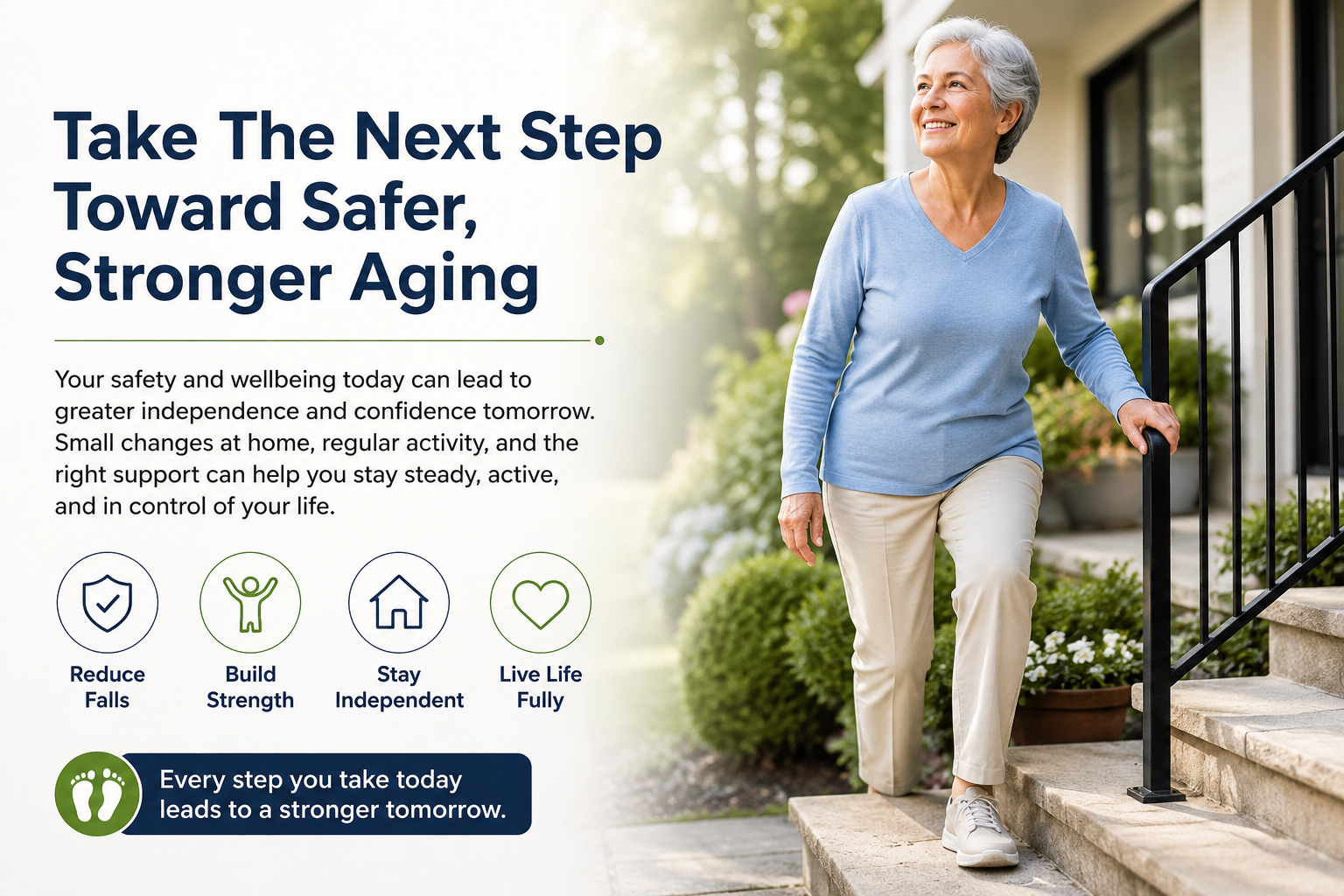
Take The Next Step Toward Safer, Stronger Aging
Falls can affect more than the body. They can also reduce confidence, independence, and daily freedom.
If you or a loved one is worried about falling, professional support can help you understand the risk and take the right next step. Physiotherapy Clinic Fiji Pte Limited serves Fiji-wide, including Suva, Nadi, Savusavu, Labasa, all of Viti Levu, Vanua Levu, and Fiji’s outer islands.
Our team can assess movement, explain fall risks, and create a plan that fits your health needs and daily routine. Book an appointment today to start moving with more confidence.