Home Recovery After Physio in Fiji: Week-by-Week Self-Management Plan
Table of Contents
What Should You Expect After Physiotherapy?
How Can You Track Pain Without Guessing?
When Should You Slow Down or Ask for Help?
Why Professional Guidance Matters During Home Recovery
When Is Home Visit Physiotherapy a Better Option?
How Physiotherapy Clinic Fiji Pte Limited Supports Fiji-Wide Recovery
Key Takeaways
Enjoy Expert Physiotherapy Care Without Leaving Home
Quick FAQs on Home Recovery After Physiotherapy in Fiji
Recovering Faster and Safer After Physiotherapy in Fiji
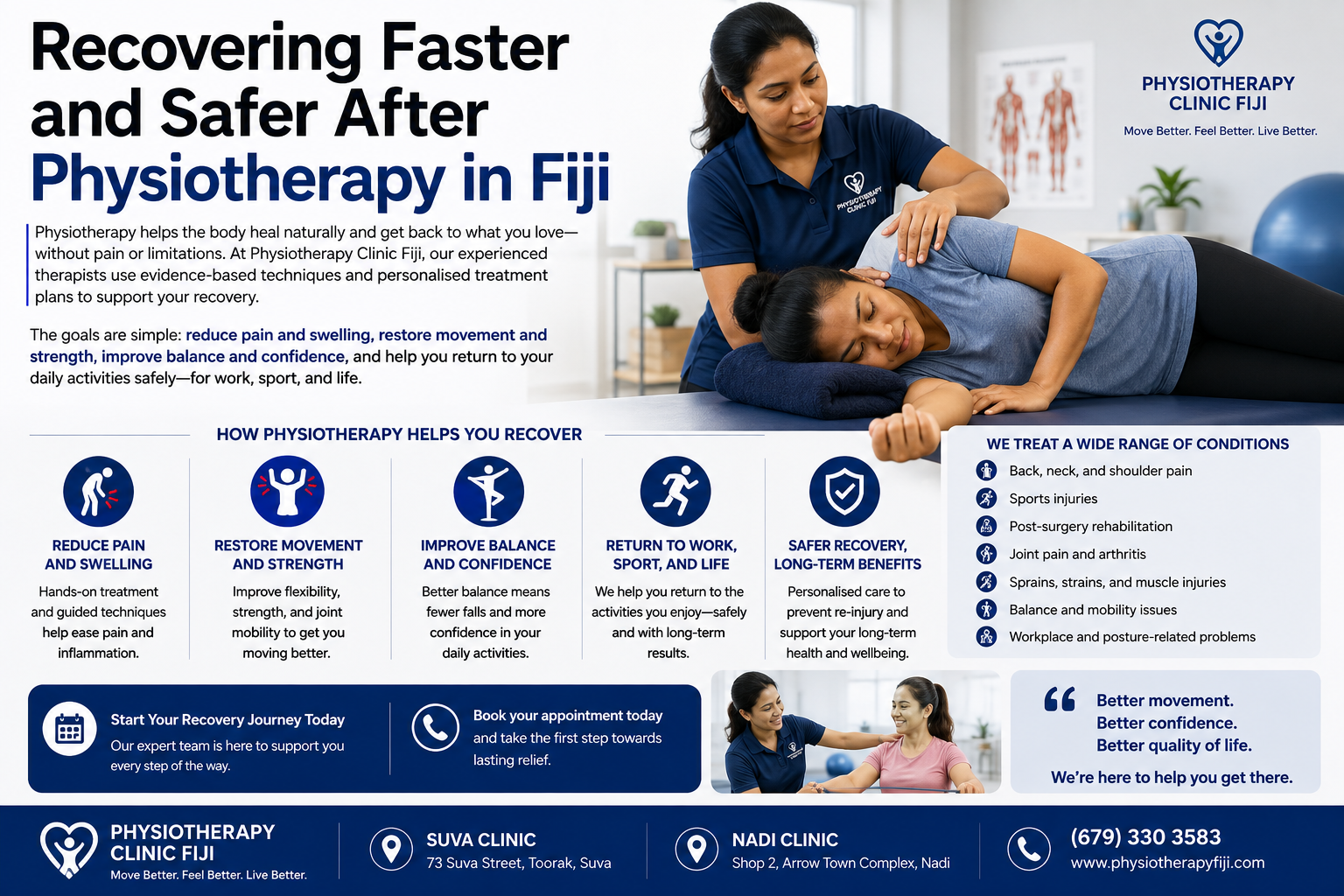
Recovering well after Physiotherapy does not end when your session finishes. Patients in Suva, Nadi, Savusavu, Labasa, and across Fiji’s islands often need clear advice on what feels normal, what may signal a setback, and when to ask for professional help.
This guide explains how to support your recovery without trying to manage everything alone. You will learn how to monitor pain, recognise warning signs, prepare for follow-up care, and understand when home visit Physiotherapy in Fiji may be the safer choice.
What Should You Expect After Physiotherapy?
Some soreness, stiffness, or tiredness can happen after Physiotherapy. Your body may be responding to movement, hands-on care, or exercises introduced during your session.
This does not mean you should push through strong pain. Recovery should feel steady and manageable, not frightening or unpredictable.
Use the first few days to notice how your body reacts. If symptoms settle within a short time, your plan may be on track. If symptoms increase or affect daily tasks, your Physiotherapist may need to review your care.
A helpful recovery check includes:
Pain level during the day
Sleep quality
Swelling or stiffness
Walking, standing, or sitting tolerance
Ability to manage washing, dressing, cooking, or work tasks
How Can You Track Pain Without Guessing?
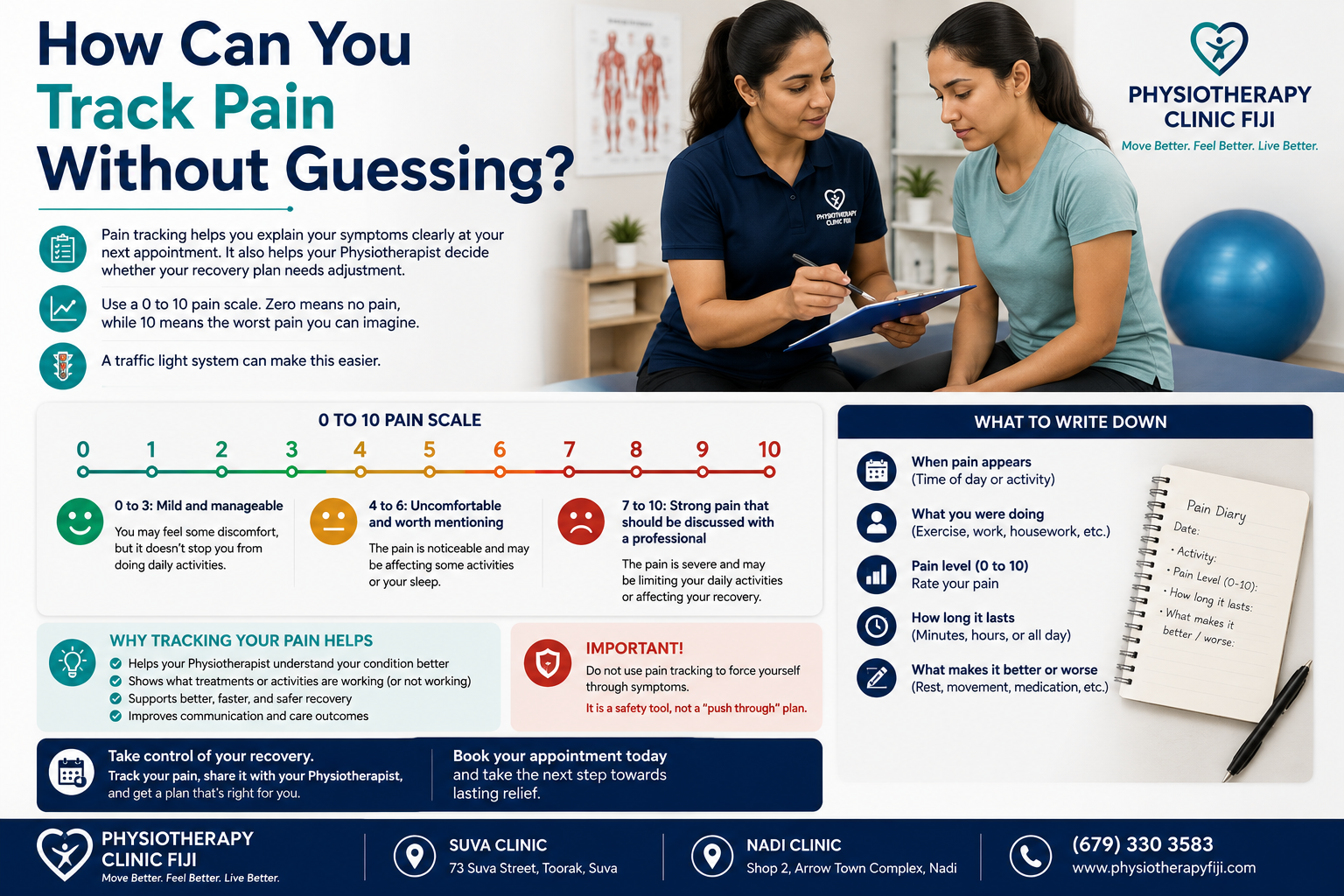
Pain tracking helps you explain your symptoms clearly at your next appointment. It also helps your Physiotherapist decide whether your recovery plan needs adjustment.
Use a 0 to 10 pain scale. Zero means no pain, while 10 means the worst pain you can imagine.
A traffic light system can make this easier:
Green, 0 to 3: mild and manageable
Amber, 4 to 6: uncomfortable and worth monitoring
Red, 7 to 10: strong pain that should be discussed with a professional
Write down when pain appears, what you were doing, and how long it lasts. This gives your Physiotherapist useful detail without relying on memory.
Do not use pain tracking to force yourself through symptoms. It is a safety tool, not a self-treatment plan.
When Should You Slow Down or Ask for Help?
Recovery is not always a straight line. Some days may feel easier, while others feel slower or more uncomfortable.
You should slow down and contact a Physiotherapist if pain becomes sharp, spreads, or does not settle. New swelling, weakness, numbness, or a joint that feels unstable should also be checked.
Seek professional help if symptoms affect basic daily activities, such as:
Getting in and out of bed
Walking to the bathroom
Dressing or washing
Preparing simple meals
Travelling safely to a clinic
For patients who cannot travel easily, book an appointment to discuss in-clinic care or home visit Physiotherapy across Fiji.
Why Professional Guidance Matters During Home Recovery
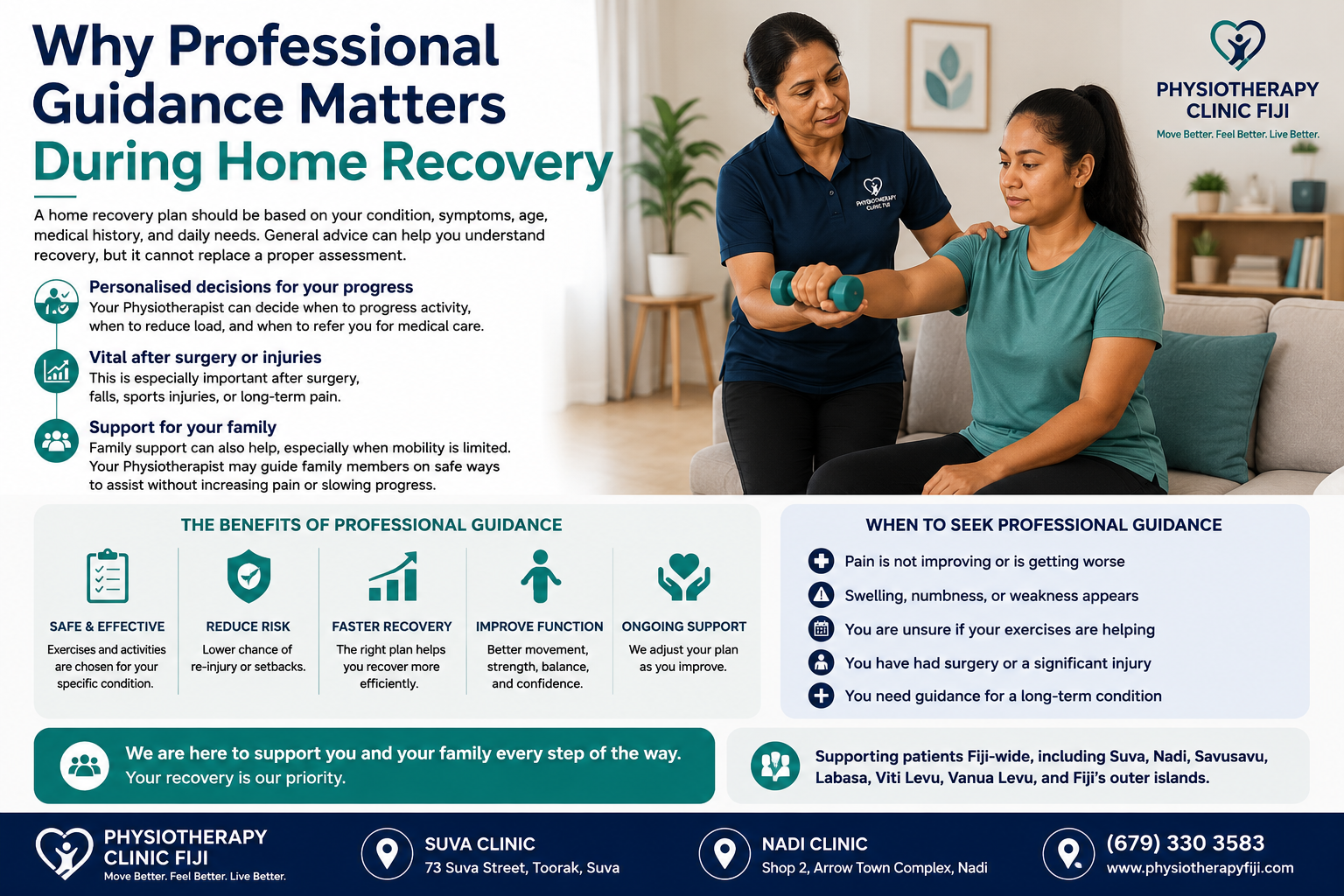
A home recovery plan should be based on your condition, symptoms, age, medical history, and daily needs. General advice can help you understand recovery, but it cannot replace a proper assessment.
Your Physiotherapist can decide when to progress activity, when to reduce load, and when to refer you for medical care. This is especially important after surgery, falls, sports injuries, or long-term pain.
Family support can also help, especially when mobility is limited. Your Physiotherapist may guide family members on safe ways to assist without increasing risk.
Physiotherapy Clinic Fiji Pte Limited supports patients Fiji-wide, including Suva, Nadi, Savusavu, Labasa, Viti Levu, Vanua Levu, and Fiji’s outer islands.
When Is Home Visit Physiotherapy a Better Option?
Home visit Physiotherapy may be suitable when pain or mobility makes travel difficult. It can also help when your home environment affects your recovery.
A Physiotherapist can see how you move in your own space. This may include checking stairs, chairs, sleeping positions, walking paths, or daily tasks that trigger symptoms.
Home care may be useful for patients with:
Recent surgery
Strong pain
Poor balance
Limited transport
Difficulty walking
Older age or frailty
A need for family support during recovery
Home visits are not just about convenience. They can help make care safer, more practical, and more relevant to daily life.
How Physiotherapy Clinic Fiji Pte Limited Supports Fiji-Wide Recovery
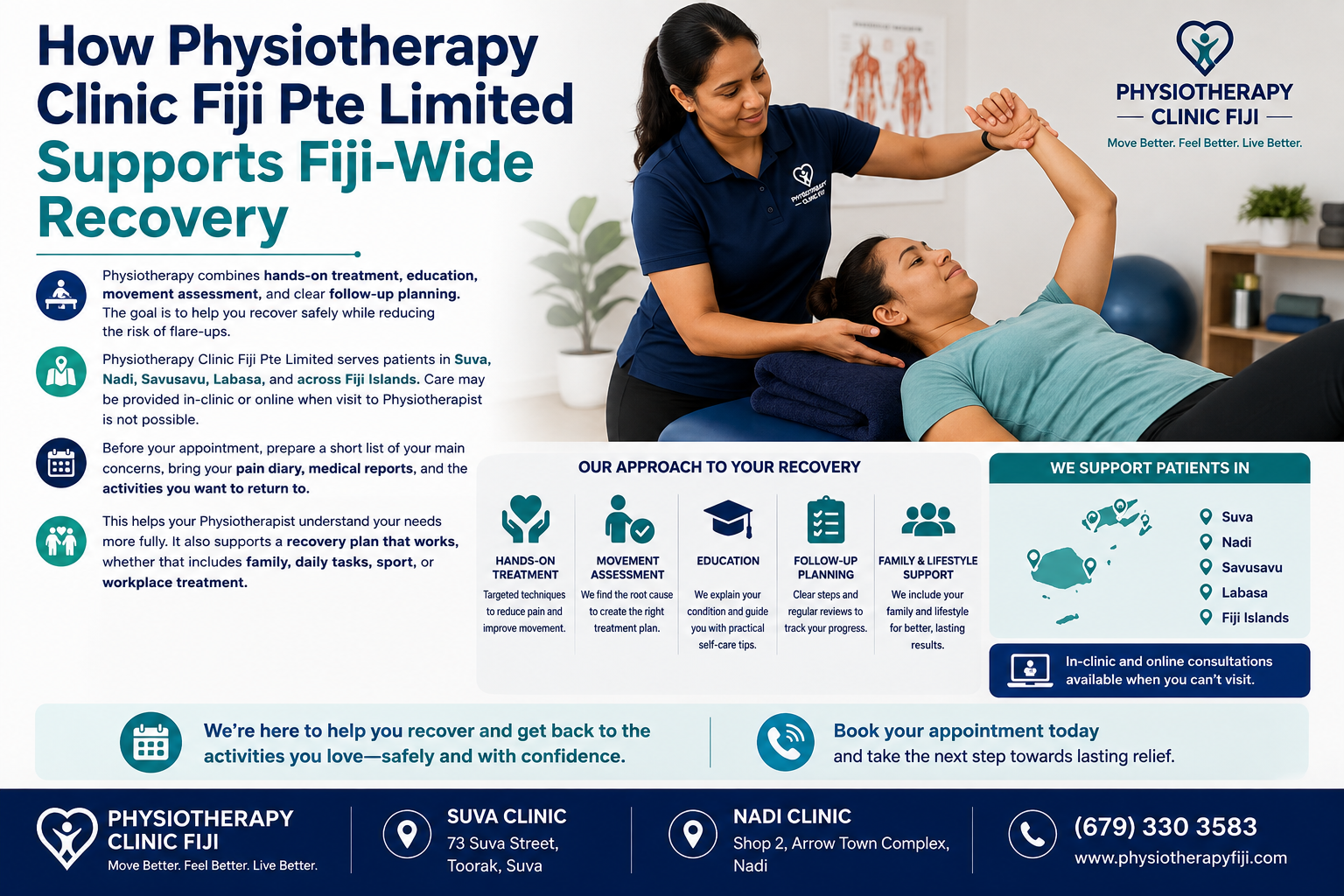
Physiotherapy care can combine hands-on treatment, education, movement assessment, and clear follow-up planning. The goal is to help you recover safely while reducing avoidable flare-ups.
Physiotherapy Clinic Fiji Pte Limited serves patients in Suva, Nadi, Savusavu, Labasa, and across Fiji’s islands. Care may be provided in clinic or through home visit Physiotherapy when travel is difficult.
Before your appointment, prepare a short list of your main concerns. Bring your pain diary, medication details, and the activities you want to return to.
This helps your Physiotherapist understand what matters most to you. It also supports a clearer plan for work, family duties, sport, or everyday movement.
Key Takeaways
Mild soreness after Physiotherapy can be normal, but sharp or worsening pain needs attention.
A simple pain diary helps your Physiotherapist adjust your care safely.
Home recovery should support your treatment, not replace professional guidance.
Patients with poor mobility, recent surgery, or strong pain may benefit from home visit Physiotherapy.
Book an appointment if pain, swelling, weakness, or limited movement affects daily life.
Enjoy Expert Physiotherapy Care Without Leaving Home
If pain or mobility issues are making it hard to travel, Physiotherapy Clinic Fiji Pte Limited can bring tailored treatment straight to your doorstep. Our qualified therapists assess your needs, create a personalised plan, and support you with practical exercises and advice in the comfort of your own home, wherever you are in Fiji. Book an appointment today to arrange a convenient time that works for you and your family.
Quick FAQs on Home Recovery After Physiotherapy in Fiji
How much pain is normal after a Physiotherapy session?
Mild soreness or stiffness can be normal after a session. Strong, sharp, spreading, or worsening pain should be discussed with a Physiotherapist.
Should I keep doing exercises if pain increases?
Do not push through strong or worrying pain. Track your symptoms and contact your Physiotherapist for advice before continuing.
When should I book a follow-up appointment?
Book a follow-up if pain limits daily tasks, swelling increases, or movement feels unsafe. You should also book if your symptoms are not improving as expected.
Can home visit Physiotherapy help after surgery?
Home visit Physiotherapy may help when travel is difficult after surgery. Your Physiotherapist can assess your movement and guide safe recovery at home.
Can family members help with my recovery?
Family members can often support daily routines and safety at home. Your Physiotherapist can guide them on helpful support without increasing risk.
Does Physiotherapy Clinic Fiji Pte Limited serve patients outside Suva and Nadi?
Yes. Physiotherapy Clinic Fiji Pte Limited serves patients Fiji-wide, including Viti Levu, Vanua Levu, Savusavu, Labasa, and Fiji’s outer islands.