Neck Pain in Fiji: Sleep Posture, Pillow Choice, and Morning Stiffness Relief
Table of Contents
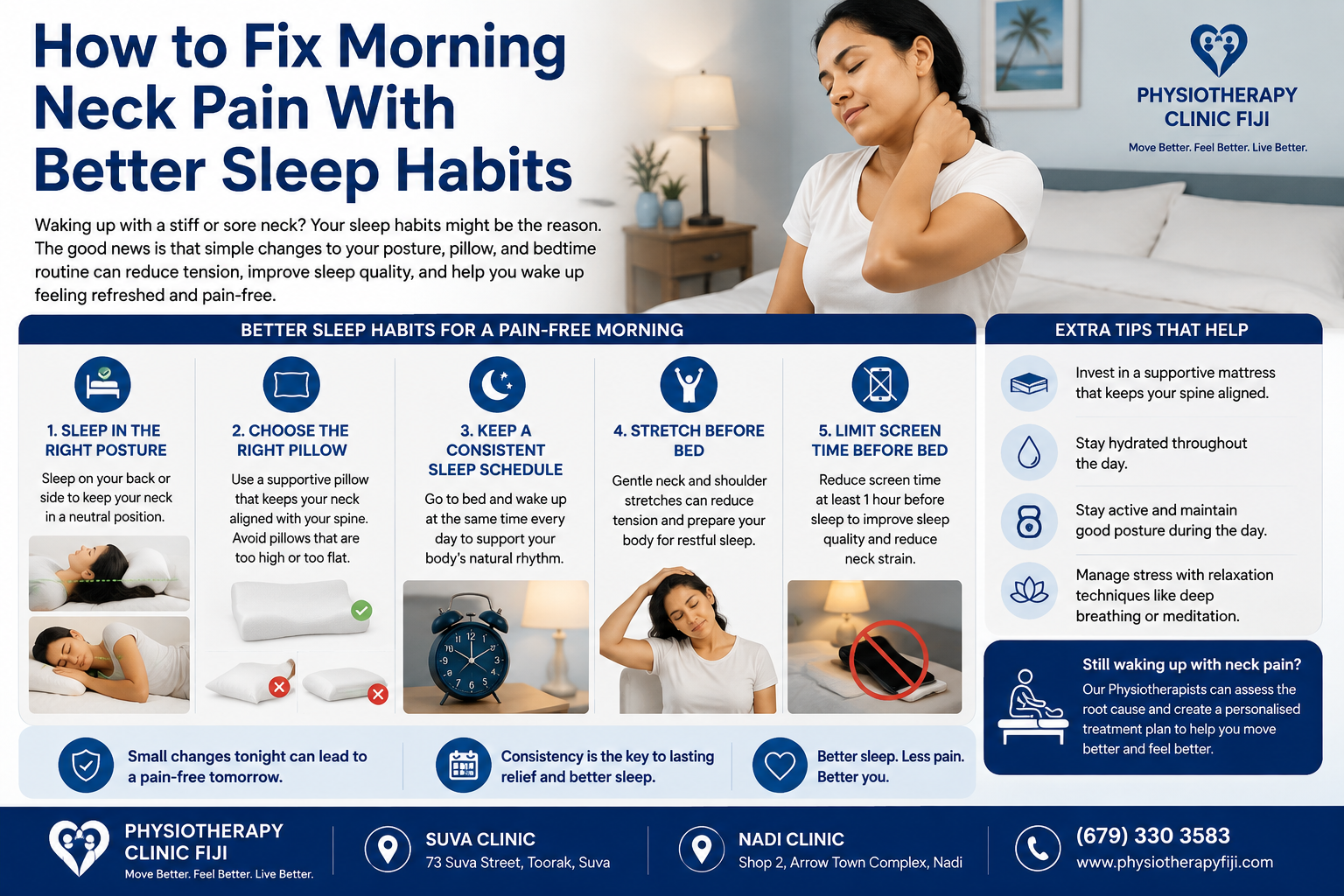
How to Fix Morning Neck Pain With Better Sleep Habits
Why Does Your Neck Hurt When You Wake Up?
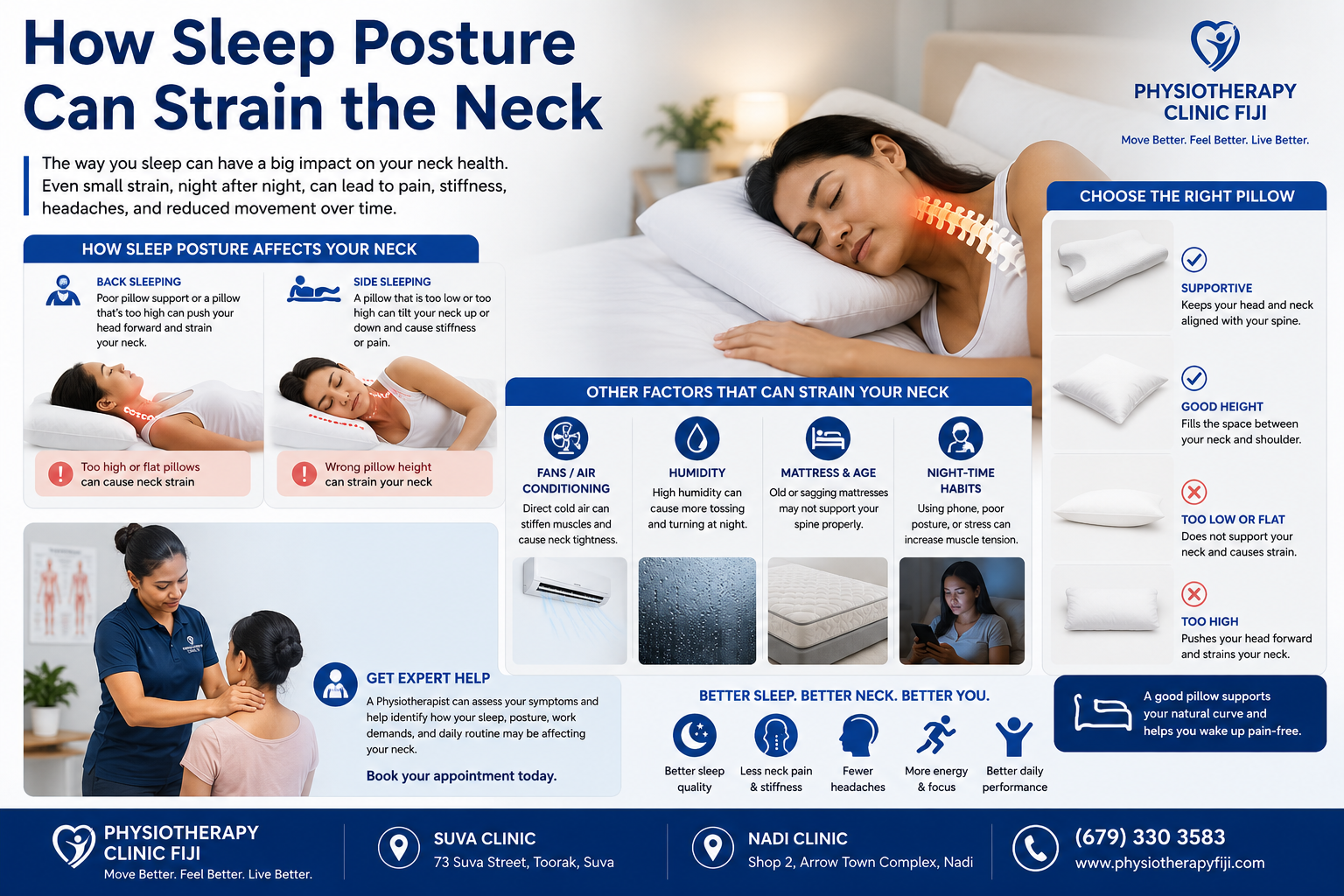
How Sleep Posture Can Strain the Neck
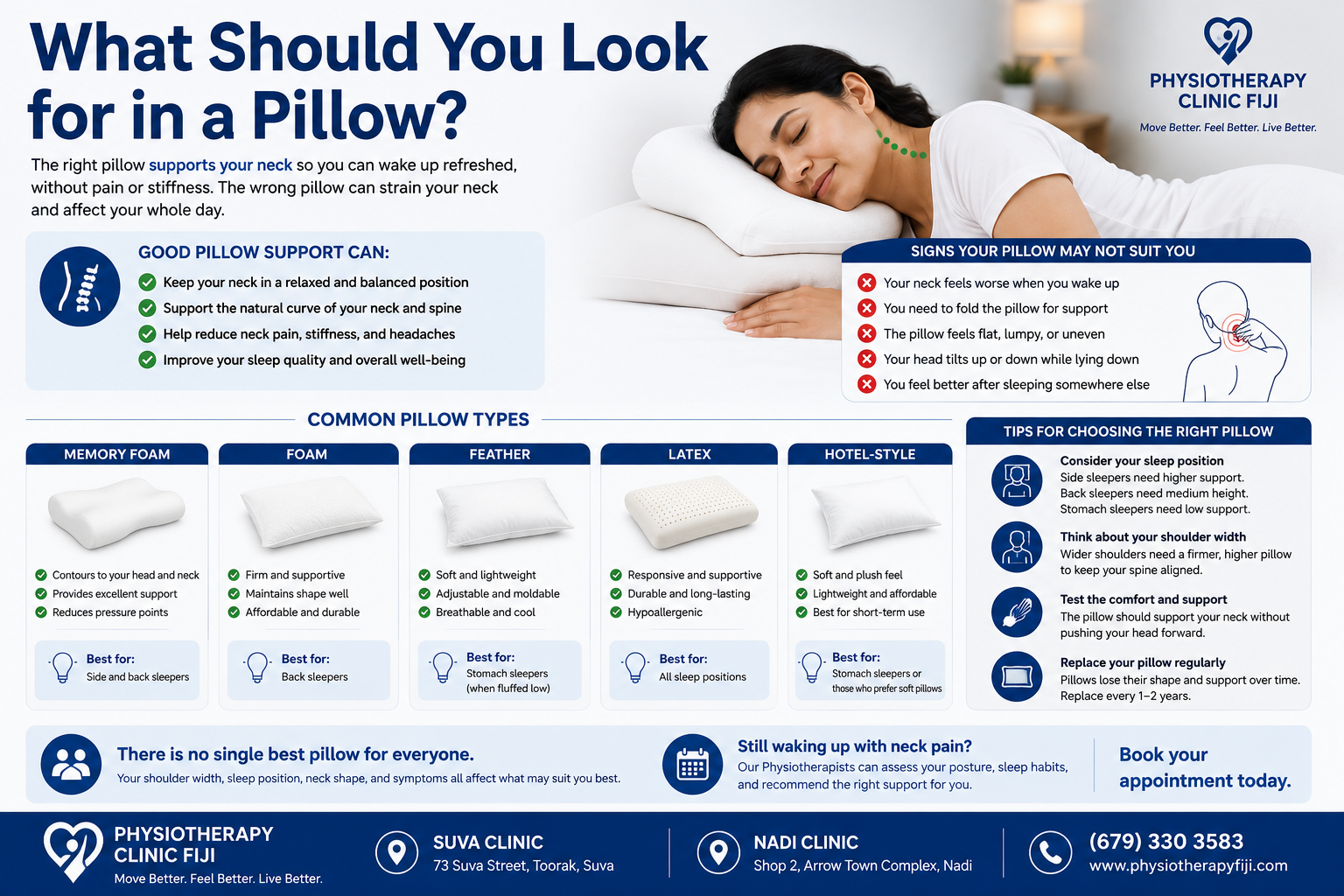
What Should You Look for in a Pillow?
When Are Sleep Habits Not the Only Problem?
How Can Physiotherapy Help Neck Pain in Fiji?
Key Takeaways
Relieve Your Neck Pain and Regain Comfortable Movement
FAQs: Neck Pain, Pillows, and Sleeping Comfort
How to Fix Morning Neck Pain With Better Sleep Habits
Waking up with a sore, stiff neck can affect your whole day. It can make driving, working, training, and simple tasks feel harder than they should. At Physiotherapy Clinic Fiji Pte Limited, we support patients in Suva, Nadi, Savusavu, Labasa, and across Fiji’s islands with practical care for neck pain. This guide explains how sleep posture, pillow support, and daily habits may contribute to morning stiffness. You will also learn when to seek professional neck pain treatment in Fiji instead of trying to manage symptoms alone.
Why Does Your Neck Hurt When You Wake Up?
Morning neck pain often happens because the neck stays in one position for many hours. If that position places too much strain on the joints or muscles, stiffness can build overnight.
The neck includes joints, muscles, nerves, and discs. Discs are soft cushions between the bones that help absorb pressure. These structures need balanced support while you sleep.
Morning stiffness may affect daily life in several ways:
Turning your head while driving
Looking down at a phone or laptop
Lifting children or carrying bags
Sitting through work, church, or community events
Training, gardening, or playing sport
If pain eases quickly, it may be a mild irritation. If it keeps returning or limits movement, a Physiotherapist should assess the cause.
How Sleep Posture Can Strain the Neck
Sleep posture matters because your neck holds that position for hours. A small strain may feel worse after a full night of poor support.
Back and side sleeping often place less twist on the neck than stomach sleeping. Stomach sleeping can force your head to one side so you can breathe. This may irritate joints and muscles, especially if pain already exists.
In Fiji, night-time habits may also play a role. Fans or air conditioning can blow cold air onto the neck. Humidity may cause more tossing and turning. Older mattresses may sag and change spinal alignment.
These factors do not affect everyone in the same way. A Physiotherapist can help connect your symptoms with your sleep habits, posture, work demands, and daily routine. Book your appointment today.
What Should You Look for in a Pillow?
Pillow support should keep your neck in a relaxed and balanced position. A pillow that is too high may push your chin down. A pillow that is too low may let your head fall backward.
Common pillow types include foam, memory foam, feather, latex, and hotel-style pillows. Each can feel comfortable, but comfort alone does not mean it supports your neck well.
Look for signs that your pillow may not suit you:
Your neck feels worse when you wake up
You need to fold the pillow for support
The pillow feels flat, lumpy, or uneven
Your head tilts up or down while lying down
You feel better after sleeping somewhere else
There is no single best pillow for everyone. Your shoulder width, sleep position, neck shape, and symptoms all affect what may suit you.
When Are Sleep Habits Not the Only Problem?
Sleep can contribute to neck pain, but it may not be the only cause. Work posture, phone use, old injuries, stress, and sports can also load the neck.
You should not ignore symptoms that feel unusual or severe. Neck pain with tingling, numbness, or pain travelling into the arm may involve nerve irritation. A nerve is a structure that carries signals between the brain and body.
Book a professional assessment if you notice:
Pain spreading into the shoulder, arm, or hand
Tingling, numbness, or weakness
Severe or repeated headaches
Dizziness or loss of balance
Pain after a fall, accident, or sudden impact
Stiffness that keeps returning despite habit changes
These signs need proper assessment. They should not be managed with pillow changes alone.
How Can Physiotherapy Help Neck Pain in Fiji?
A Physiotherapist looks beyond the sore area. They assess your neck, shoulders, upper back, posture, movement, and daily activities.
At Physiotherapy Clinic Fiji Pte Limited, care may include movement assessment, hands-on treatment, exercise guidance, and posture education. Hands-on treatment means gentle techniques that help muscles and joints move more comfortably.
Your plan may also include advice about sleep, screens, work tasks, and sport. The goal is to find what contributes to your symptoms and guide safe recovery.
Physiotherapy Clinic Fiji Pte Limited supports patients Fiji-wide, including Suva, Nadi, Savusavu, Labasa, Viti Levu, Vanua Levu, and the outer islands. If recurring stiffness affects your sleep or daily life, book an appointment to discuss the right care pathway.
Key Takeaways
Morning neck pain can come from poor sleep posture, pillow height, or prolonged strain.
A pillow should support your neck without forcing your head forward or backward.
Stomach sleeping may keep the neck twisted for long periods.
Pain with arm symptoms, dizziness, headaches, or weakness needs professional assessment.
If neck stiffness keeps returning, book an appointment for personalised guidance.
Relieve Your Neck Pain and Regain Comfortable Movement
If neck stiffness or recurring pain is limiting your daily activities, Physiotherapy Clinic Fiji Pte Limited is ready to help you move with confidence again. Our experienced team provides evidence-based care tailored to your specific symptoms so you can get back to work, exercise, and restful sleep. Learn how our expert neck pain treatment in Fiji can address the root causes of your discomfort and support long-term recovery across Viti Levu, Vanua Levu, and the outer islands. Book an appointment today and take the first step toward lasting relief.

FAQs: Neck Pain, Pillows, and Sleeping Comfort
How do I know if my pillow is causing neck pain?
Your pillow may be involved if pain feels worse in the morning and eases during the day. It may also be a factor if you sleep better with a different pillow. A Physiotherapist can help confirm whether pillow support is part of the problem.
Is stomach sleeping bad for neck pain?
Stomach sleeping can keep your neck turned for several hours. This may increase strain on joints and muscles. If pain keeps returning, ask a Physiotherapist for advice that suits your body and symptoms.
Can air conditioning or fans cause neck stiffness?
Cold air blowing directly on the neck may make some muscles feel tighter by morning. This may be one factor, especially when combined with poor posture or pillow support. Ongoing stiffness should still be assessed if it affects daily life.
Are memory foam pillows better for neck pain?
Memory foam pillows help some people, but they are not right for everyone. The height, shape, and firmness must suit your body and sleep position. Professional guidance can help you avoid choosing based on comfort alone.
When should I see a Physiotherapist for neck pain?
See a Physiotherapist if pain keeps returning, limits movement, or affects work, driving, or sleep. You should seek prompt care if pain spreads into the arm or comes with numbness, weakness, dizziness, or headaches.
Can Physiotherapy help if my neck pain is linked to work posture?
Yes, Physiotherapy can assess how your work posture may affect your neck. Your Physiotherapist may review sitting habits, screen use, shoulder movement, and upper back mobility. This helps guide a plan that fits your daily tasks.